
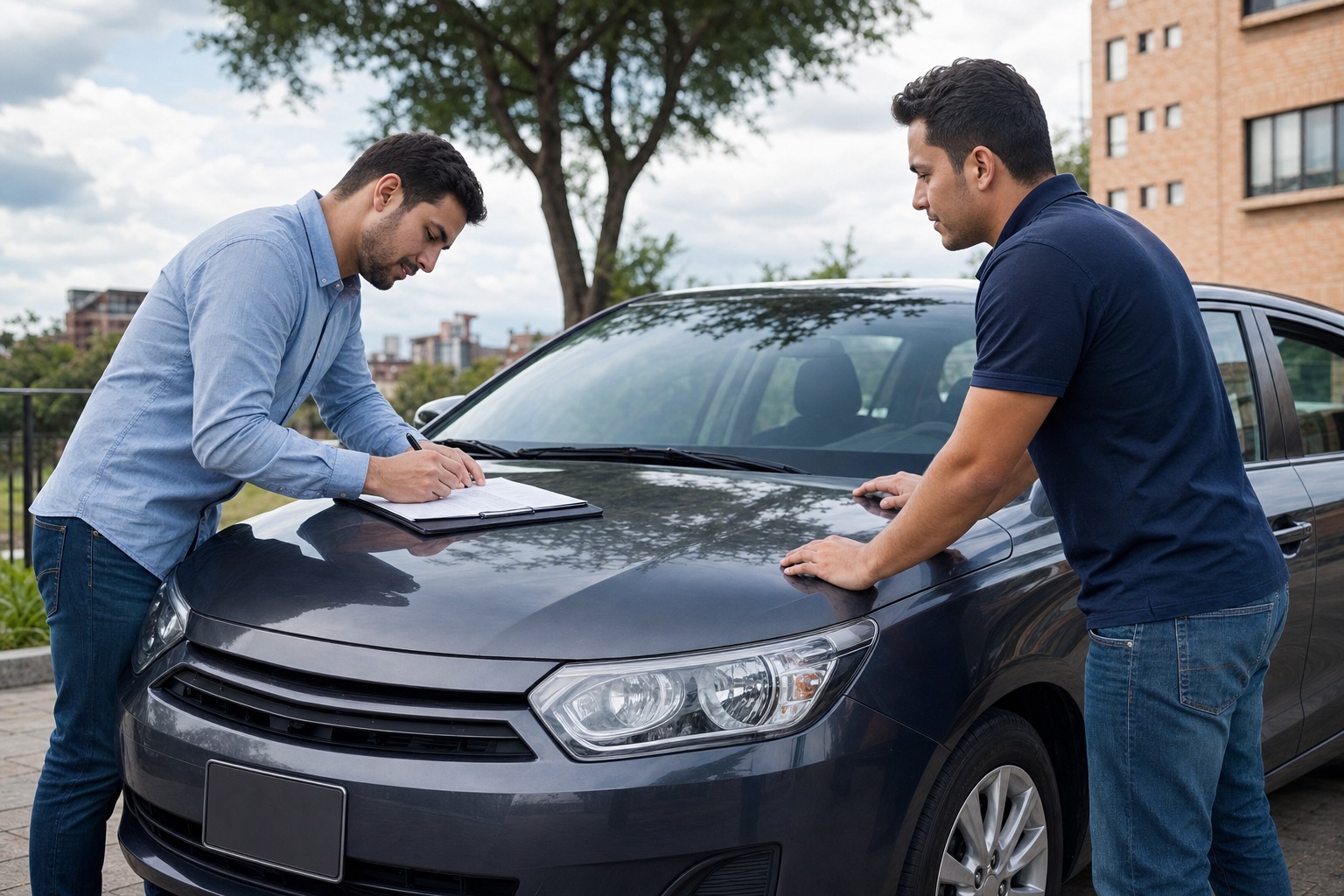
Vehicle transfer of ownership in Colombia is the legal process that changes the registered owner of a car with the corresponding traffic authority. It is done through a notarized sale contract and registration update in RUNT (Registro Unico Nacional de Transito), and it is required for the buyer to become the legal titleholder.
Without this process, the buyer is not the legal owner in the eyes of the state, even if they hold the keys and the car itself. This can create problems if the vehicle has traffic fines, liens, or if the original seller sells it again by mistake or in bad faith.
General steps of the transfer
While exact requirements can vary by city and traffic authority, the general process in Colombia includes:
- Confirming the vehicle has no liens, seizures, or unpaid traffic fines.
- Signing a sale contract between buyer and seller, with signatures notarized.
- Having a valid SOAT insurance policy and an up to date technical and emissions inspection if the vehicle is required to have one based on its age.
- Filing the documents with an authorized traffic registration office to request the transfer.
- Waiting for the RUNT record to be updated under the new owner's name.
What to check before buying a used car
Before moving forward with any transfer, it is worth checking the vehicle's history (SOAT status, technical inspection, fines and possible liens) directly through official traffic platforms, since this information changes constantly and should not be assumed from what the seller says.
Buying through a platform that aggregates verified dealer inventory, like LatiAutos, helps reduce risk because listings tend to include more complete vehicle details before starting the transfer process. As of September 3, 2026, there are 6,151 used vehicles available in Colombia within LatiAutos, priced between $2,016 and $65,600.
Common mistakes that delay the transfer
The most frequent delays happen because of inconsistent data between the ID card, the vehicle title, and the sale contract, or because buyers do not verify in time whether the vehicle has active fines or liens. Resolving this before signing saves weeks of paperwork.
Frequently asked questions
Here are common questions about vehicle transfer of ownership in Colombia.
How much does a vehicle transfer of ownership cost in Colombia?
The cost varies by traffic authority and city, and includes steps like notarization and registration fees. It is best to confirm the exact amount directly with the local traffic authority before starting.
How long does the vehicle transfer take?
It depends on the traffic authority and whether the paperwork is complete and consistent. Well prepared filings usually move faster than those with mismatched data across documents.
What documents do I need for the transfer?
Generally you need the vehicle title, ID cards for both buyer and seller, a notarized sale contract, valid SOAT insurance, and the technical inspection if required based on the vehicle's age.
Can I do the vehicle transfer online in Colombia?
Some traffic authorities offer partial procedures or lookups online, but full filing usually requires an in person or notary step depending on the entity. It is best to confirm directly with the relevant office.
Do I need the technical inspection before the transfer?
If the vehicle is required to have one based on its age, yes, it must be valid before completing the transfer. This inspection is Colombia's equivalent to technical checks like RITEVE or DEKRA in other countries.